
The compounding effect
The process that amplifies gains when you consistently engage in an activity

The compound effect, also known as compounding, refers to the process where small, consistent actions accumulate over time to produce significant results. While this concept is often associated with finance, it can be applied to various aspects of life, including personal development, health, and productivity.
I find this concept particularly intriguing because of its tremendous potential to bring about substantial benefits both in the long term and the short term.
The compound effect is a core principle of this newsletter, aptly named "1 percent," which is inspired by the idea that making a 1% improvement every day can lead to significant progress over several months. Additionally, the concept emphasizes the importance of habit formation—doing something daily to improve, regardless of how you feel, because you know it's necessary for growth.
The compound effect isn't a linear or two-dimensional concept where a daily +1 simply adds up to +200 after 200 days. Instead, it operates in a more complex, three-dimensional, or even four-dimensional way, where each +1 impacts not just the specific area of focus but also other aspects of your actions, mind, and body. Ultimately, this can result in a much greater cumulative effect, potentially leading to an overall improvement of +300 or more.
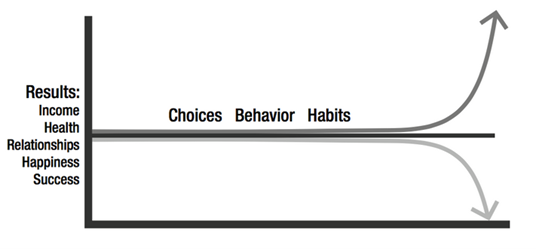
The process itself should be celebrated, acknowledged, and embraced. If you're too focused on the result, two potential outcomes may occur:
You might not achieve the desired result, which could lead to disappointment and discourage you from continuing the effort.
You might achieve the desired result, and experience a dopamine rush from the achievement, but then face a decline in motivation afterward because there's no plan beyond the goal.
It's important to find enjoyment in the process or at least have the willpower to continue doing it every day or regularly, even if the ultimate goal seems distant. It's also crucial to understand your "why"—the reasons behind your actions. Whether it's exercising more, spending more time with your kids, eating healthier, or any other goal, knowing why you're doing these things can provide motivation and purpose.
Here’s a detailed breakdown of the compound effect which I gathered from the internet :
Financial Context
Investing and Interest: When you invest money, the earnings (interest or returns) you receive also start to earn interest. This results in exponential growth of your initial investment. For example, if you invest $1,000 at an annual interest rate of 5%, you will have $1,050 at the end of the first year. In the second year, you earn interest on $1,050, not just the original $1,000.
Long-Term Impact: The longer you leave your investment to grow, the more pronounced the compound effect becomes. This is why starting to invest early is often emphasized in personal finance advice.
Personal Development
Habit Formation: Small, daily actions, such as reading for 10 minutes, exercising, or practicing a skill, compound over time to produce significant improvements. For example, reading just 10 pages a day can lead to reading around 3,650 pages a year, which is equivalent to 12-15 books.
Skill Development: Consistently working on a skill, even for short periods each day, leads to gradual and steady improvement. This is often more effective than sporadic, intense efforts.
Health and Fitness
Exercise and Nutrition: Small, consistent choices in diet and exercise lead to substantial health benefits over time. For example, cutting 100 calories a day can lead to significant weight loss over a year without drastic dieting.
Lifestyle Changes: Adopting healthy habits like drinking more water, getting regular sleep, or reducing stress incrementally improves overall well-being.
Productivity and Success
Daily Progress: Breaking down large goals into smaller, manageable tasks and consistently working on them leads to achieving big results. For instance, writing one page a day can lead to completing a book within a year.
Incremental Improvements: Making small, continuous improvements in processes or routines can lead to substantial productivity gains.
Key Principles of the Compound Effect
Consistency: Regular, repeated actions are crucial for the compound effect to take place. Inconsistency can disrupt the momentum and diminish the overall impact.
Patience: The benefits of the compound effect are often not immediate. It requires patience and long-term thinking to see significant results.
Discipline: Sticking to small actions consistently over time requires discipline, especially when immediate results are not visible.
Time: The more time you give for the compounding to work, the greater the results. This is why starting early, whether in investing or personal development, is advantageous.
The compound effect is a powerful concept that demonstrates how small, consistent actions can lead to significant and often exponential results over time. Whether in finance, personal growth, health, or productivity, understanding and leveraging the compound effect can lead to remarkable outcomes.
The challenge with the compound effect is that the benefits it provides aren't permanent. Nothing we learn or achieve is retained forever without continued effort. If you stop practicing consistently, you may gradually lose the progress you've made—perhaps by 1% each day, who knows? The hard-earned results can't be preserved in a static state.
You might think that once you've accomplished a goal, you can shift your focus elsewhere and assume that achievement is secure:
"Yes, I've reached this milestone, so I can now concentrate on other things because this achievement is solidified in me."
However, it doesn't work that way. We must continually strive to maintain what we've gained. We have to consistently nurture our relationships with partners, friends, children, and colleagues. We must keep honing our job skills, social abilities, and healthy habits. It's essential to accept that these practices are ongoing and that there's no definitive endpoint for the habits we value.
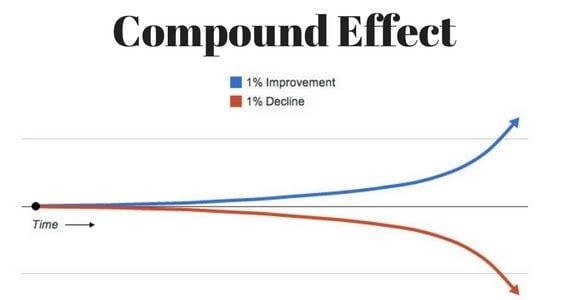
The compound effect can work in both positive and negative directions.
The following graph likely illustrates what happens if you stop engaging in activities that promote personal growth. For example, if you stop reading books, you may lose a significant amount of knowledge, vocabulary, critical thinking, innovative thinking, and creative thinking. However, you'll still maintain a basic level of literacy necessary to "survive" in today's world.
Even if you don't read books, you'll still encounter reading material daily, such as emails, Facebook posts, TikTok content, Instagram updates, street signs, car indicators, notifications on your phone and laptop, and food labels. While these may keep your reading skills at a functional level, they won't challenge you to thrive intellectually. Instead, you'll settle into a basic "survivability" level that I call the “bottom survivability area”. This bottom is shared with functional illiterates. And you don’t want to share that bottom with those people. :)
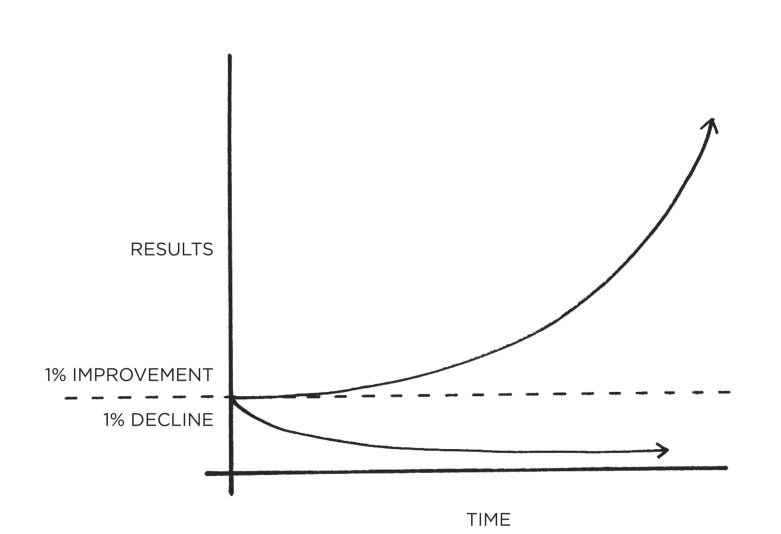
On a positive note, you're already engaging in daily habits that have a compounded effect. For instance, raising your children to the best of your ability has a compounded effect with very long-term consequences. Your consistent effort can help prepare them well for adulthood and the rest of their lives.
Similarly, investing time in your job—spending several hours each day—can gradually make you a true professional in your field. After several years, you might even be considered an expert. If you're fortunate, others will recognize your expertise and reward you with a higher salary.
These examples are both easy and challenging. They're easy because you have no choice but to do them; they're necessary for life. However, they're also hard for the same reason—you have to do them every day, even when you don't feel like it. You might argue that the lack of choice simplifies the commitment.
The real challenge arises when you do have a choice. Choosing to do something beneficial for your future, even when there’s no immediate payoff and when easier, more enjoyable alternatives are available (like watching TV or browsing your smartphone), is where true progress begins. This intentional choice to engage in productive activities, despite not feeling like it, is crucial for developing habits and reaping the benefits of the compound effect.
There are countless theories, opinions, methods, truths, and self-help books out there, which can be overwhelming. It can sometimes make you feel like you're not doing enough for yourself or those around you. That’s why it’s important to read as many books and opinions as possible and determine for yourself what resonates with you and what approach works best for your life.
I've simplified the consistent habits I aim to practice daily to four: reading, writing, drawing, and exercising. My goal is to engage in each of these activities for at least 5 minutes a day. Even just 5 minutes for each task adds up to 20 minutes a day, which totals 7,300 minutes or 121 hours per year. For me, these 121 hours per year are a way to prove to myself that I can maintain consistency, and the results are secondary. All I can hope is that I can maintain these habits and many others for as long as I can to have a compounding effect.
In the end, there's a saying that becomes more accurate with each passing year, applicable to everything from physical abilities to habits, passions, skills, and more: use it or lose it.
See you next week, and as always, do your own research about compounding and how it works.
George